
Contact Centres for UAE Insurance: Claims, Renewals, and Customer Retention
September 1, 2026
Odoo HR and Payroll in the UAE: Meeting Labour Law and WPS Requirements
September 1, 2026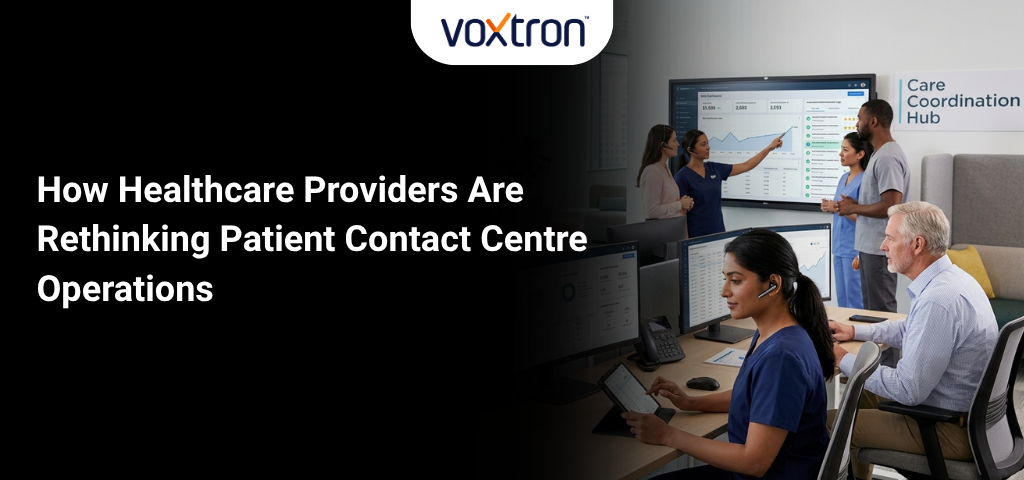
How Healthcare Providers Are Rethinking Patient Contact Centre Operations
Healthcare in the UAE has grown into one of the most sophisticated service sectors in the region. Hospitals, clinic networks, insurance-linked providers, and specialty centres all compete for patient trust, and much of that trust is shaped by how easy it is to reach the provider, book an appointment, or get an answer to a health-related question. In a market where clinical outcomes are increasingly standardised across providers, the operational experience surrounding those outcomes has become a significant differentiator.
Patient contact centre operations, historically treated as an administrative function sitting quietly behind the reception desk, are being rethought as a strategic capability. Providers that treat patient contact as an extension of clinical care — rather than as a booking and billing function — are seeing meaningful differences in patient acquisition, retention, and referral. This article looks at how healthcare providers across the UAE are approaching this shift and what a modern patient contact centre actually looks like in practice.
Why Patient Contact Centres Are Getting More Strategic Attention
Several forces are pushing healthcare providers to invest more deliberately in patient contact centre operations. Patient expectations have risen sharply, shaped by consumer service experiences in banking, retail, and hospitality. Competition among providers within Dubai, Abu Dhabi, and the wider UAE has intensified, with new entrants continually raising the standard of what is possible. Insurance-driven referrals increasingly reward providers that respond quickly and communicate clearly. Regulatory expectations around patient communication, consent, and data handling have tightened under frameworks maintained by the Dubai Health Authority and equivalent bodies across the Emirates. And the growth of home care, telehealth, and hybrid care models has made coordination through the contact centre more important than ever, because these care models depend on strong communication infrastructure to work.
Providers that treat the contact centre as a strategic capability rather than a back-office cost tend to win on patient acquisition, satisfaction, and retention. Those that under-invest often find that clinical excellence alone is no longer enough to attract and retain patients in a market where operational experience has become part of the value proposition.
The Full Range of Patient Contact Centre Work
Modern patient contact centres handle a broader remit than traditional appointment booking. On any given day, the same team may be juggling multiple types of interaction across every channel the provider supports. The main categories typically include:
- Appointment management — booking, rescheduling, cancellations, and reminders across specialties
- Pre-visit coordination — insurance verification, referral confirmation, document collection
- Test result communication and follow-up scheduling, often requiring clinical sensitivity
- Billing, payment collection, and insurance claim status enquiries
- Prescription and refill requests, particularly for chronic condition management
- Complaint handling and emergency triage with clear escalation pathways
This breadth of workload means the contact centre is no longer a single-purpose team but a multi-skilled operation with distinct workflows for each interaction type. Trying to run all of this on generic voice-only infrastructure creates the friction that patients feel and providers pay for.
The Channels Patients Now Expect
Patient contact preferences have shifted decisively toward digital channels. Voice remains important for urgent, emotional, and complex conversations, and it is unlikely to disappear from healthcare in the foreseeable future. But many routine interactions have moved to messaging, particularly WhatsApp, which has become the preferred channel for appointment booking, reminders, and quick clarifications across large parts of the UAE patient population. Mobile applications provide access to records, appointment history, and prescription management. Web chat supports questions during the research phase when patients are evaluating providers. SMS and email carry confirmations, notifications, and reminders that need to be received reliably even if not immediately read.
The critical requirement is not just to offer each channel but to connect them, so that a patient who books an appointment through WhatsApp, then calls to ask a question, then follows up through the mobile app does not have to explain themselves three times to three different systems. Channel connection is what turns multiple channels into a single patient experience, and it is the single biggest differentiator between a modern patient contact centre and a channel-siloed one.
The Role of AI and Automation
Automation has a well-defined role in patient contact centres, and an equally clear boundary. AI-driven chatbots and voice systems handle appropriate interactions well: routine appointment booking and rescheduling, appointment reminders and preparation instructions, location and hours enquiries, basic insurance verification, prescription refill status queries, and test result availability notifications. These interactions are high-volume, well-defined, and largely predictable, which makes them strong candidates for automation that improves customer experience while reducing agent workload.
For clinical questions, emotional situations, complaint handling, and complex coordination, live agents — supported by AI assistance behind the scenes rather than replaced by AI in front of the customer — remain the right choice. The distinction matters enormously. Automating the wrong conversations damages patient trust in ways that can take a long time to recover from. Automating the right conversations frees agents to focus on the interactions that need human judgement, empathy, and clinical awareness. Providers that draw the automation boundary thoughtfully see the best of both worlds; those that automate too aggressively often find that patient satisfaction declines even as operational costs improve.
Compliance and Integration with Clinical Systems
Patient information is among the most sensitive data any enterprise handles. Contact centre platforms in healthcare need to support the full compliance framework that governs it, including secure recording and storage, role-based access, complete audit trails, and UAE-hosted data residency where sector guidance requires it. These are not features that can be bolted on later; they need to be part of the platform design from the start.
A modern patient contact centre is also only as effective as its integration with the wider clinical environment. Without integration, agents spend the majority of their time hunting for information across multiple systems rather than actually helping patients. Integrations that typically matter most include the hospital information system for records and scheduling, practice management systems for physician availability, insurance verification platforms, laboratory information systems for test results, and pharmacy systems for prescriptions and refills. When these integrations are in place, the agent can genuinely help the patient in a single call. When they are not, every interaction becomes a puzzle to be assembled, and the patient feels the friction.
How Voxvantage Supports Healthcare Contact Centres
Voxvantage is deployed across healthcare providers in the UAE and the wider region, supporting the specific requirements of patient contact centre operations. The platform unifies handling of voice, WhatsApp, web chat, email, and SMS in a single agent workspace, with the full patient context visible regardless of channel. Integration with hospital information systems, insurance platforms, and clinical applications reduces the tab-switching that consumes agent time. AI chatbot capability handles appointment management and routine queries at scale, with seamless handover to live agents for anything requiring judgement. UAE-hosted deployment through Moro Hub supports the data residency requirements of the healthcare sector, and recording, quality management, and compliance monitoring operate across every channel.
Combined with Engage360 for digital patient engagement, providers can deliver connected, multilingual, and consistent patient experience across every touchpoint from first enquiry through to post-treatment follow-up.
Conclusion: A Function Worth Reinvesting In
Patient contact centres have moved well beyond appointment booking and now sit at the heart of the patient experience. In a market where patients increasingly choose providers based on how easy the operational experience feels, the contact centre has become a genuine driver of business outcomes rather than a cost to be minimised. Healthcare providers that reinvest in this capability — combining the right platform, the right integrations, and the right balance of automation and human agents — build patient trust in a market where trust increasingly determines choice. To explore how Voxvantage can support your patient contact centre operations, speak with our team today or request a demo.